

Financing With Bad Credit
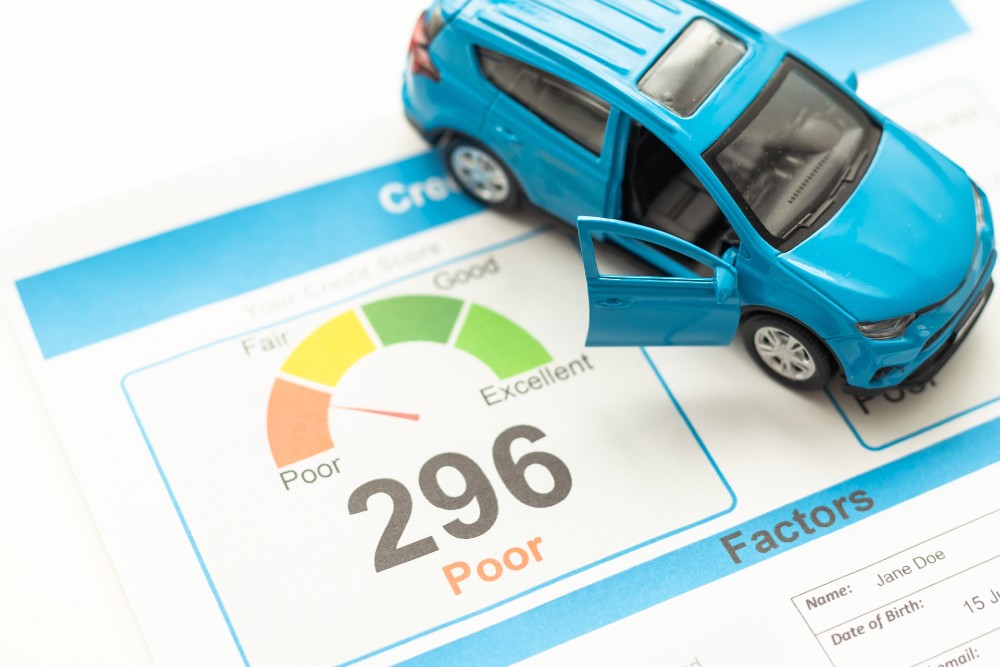
Buying a car when your credit isn't perfect can feel like an uphill climb, but it doesn't have to be. At Capitol Ford Santa Fe, our finance team works with drivers across Santa Fe, NM every day who are wondering the same thing: is a bad credit score really a dealbreaker? It usually isn't, and many buyers are surprised by how many doors are still open. Knowing how to get financing with bad credit starts with understanding what lenders actually look at, and that's exactly what this guide walks through.
- A low credit score doesn't automatically disqualify you from an auto loan.
- Your credit score is one factor among several, including income and down payment.
- A larger down payment or a co-signer can improve approval odds and loan terms.
- Making on-time payments on a new auto loan is one of the fastest ways to rebuild credit.
- Capitol Ford Santa Fe's finance team works with a range of lenders to find options for various credit backgrounds.
Can You Really Get Financing With Bad Credit?
Yes. Most lenders look well beyond a three-digit score, so bad credit rarely closes the door on a car loan completely. It typically means different terms, not no terms at all.
Lenders want to know one thing above all else: can you make the payment? A credit score offers a quick snapshot of past borrowing habits, but it isn't the whole story. Income, employment history, and the size of your down payment all factor into an approval decision. That's why learning how to get financing with bad credit often comes down to preparation rather than a perfect number. A shopper who's steadily employed and makes a modest down payment can still secure a reasonable loan, even with a score under 600.
Dealerships that work with multiple lenders, rather than just one bank, tend to have more flexibility to match a buyer with a program suited to their situation. That's the approach our finance office takes with every application that comes through the door, whether the buyer is a first-time borrower or someone rebuilding after a rough financial year.
- Steady income and length of employment
- Total monthly debt compared to income
- Size of the down payment or trade-in equity
What Is a Credit Score and What Goes Into It?

A credit score is a three-digit number, typically between 300 and 850, that summarizes how reliably someone has repaid debt in the past. It's built from payment history, amounts owed, and a few other factors.
Payment history carries the most weight, followed closely by credit utilization, or how much of your available credit is currently in use. Length of credit history, the mix of credit types (credit cards, student loans, prior auto loans), and recent credit inquiries round out the formula.
A dip in any of these areas, such as a few missed payments during a rough stretch, can pull a score down even when someone's overall financial picture is solid.
Understanding this breakdown matters because it shows the score isn't fixed. Small, consistent habits move it over time, which is good news for anyone working on their credit while shopping for a vehicle in Santa Fe, NM.
What Goes Into a Credit Score?
| Factor | Impact | Example |
|---|---|---|
| Payment history | Largest single factor in most scoring models | Two missed payments six months ago |
| Credit utilization | Higher usage relative to limits lowers the score | A card near its limit each month |
| Length of credit history | Longer history generally helps the score | An account open for eight years |
| Credit mix | A variety of account types can help | Auto loan plus one credit card |
| New credit inquiries | Several inquiries in a short window can lower it | Three loan applications in one month |
Why Does Your Credit Score Matter So Much?
Your credit score mostly shows up in the price tag of a loan, not whether you get one. It shapes your interest rate, your monthly payment, and the total amount you'll pay by the time the loan is paid off.
A higher score generally unlocks a lower APR, which may seem small on paper but adds up quickly over a 60- or 72-month loan. Two buyers financing the same vehicle at different rates can end up thousands of dollars apart in total interest paid. Credit also plays a role well beyond the dealership. Landlords, some insurance providers, and even certain employers view credit history as a general indicator of financial reliability.
That's part of why so many shoppers want to know how to get financing with bad credit that not only gets them into a car today but also sets them up to do better next time. Treating this loan as a stepping stone, rather than a one-time transaction, tends to pay off.
- The interest rate (APR) a lender offers you
- Your monthly payment amount
- The total interest paid over the life of the loan
- Sometimes, insurance premiums and rental applications
How Can You Rebuild Your Credit While Financing a Car?

The most effective way to rebuild credit is to make every auto loan payment on time. A well-structured loan, paired with responsible habits elsewhere, can steadily raise a score over the following year.
An auto loan reports to all three major credit bureaus, so consistent, on-time payments build a positive track record fairly quickly. Pairing that with keeping credit card balances low and avoiding unnecessary new credit applications gives a score room to climb. Many buyers who start with a subprime rate find that after 12 months of steady payments, they qualify to refinance into a better rate. That's worth keeping in mind rather than assuming today's terms are permanent.
Why credit matters here goes beyond the car itself. A stronger score down the road can mean lower rates on the next loan, easier housing approval, and greater financial flexibility overall. It's a long game, but every on-time payment moves the needle in the right direction.
- Pay every bill, not just the car loan, on time
- Keep credit card balances well below their limits
- Avoid opening several new credit accounts at once
- Check your credit report periodically for errors
How Does Capitol Ford Santa Fe Help Buyers With Bad Credit?
Our finance team custom-builds a loan package around each buyer's situation, whether credit history is near-perfect, a little rocky, or in need of real rebuilding. No credit profile is automatically turned away.
Rather than relying on a single bank, Capitol Ford Santa Fe works with competitive lenders directly from the manufacturer, as well as local New Mexico banks, which offers more programs than a single-lender dealership could.
Buyers start with a free credit application, and from there the finance team puts together a package tailored to their specific credit profile, whether they have never missed a payment or have been turned down for financing before. That last group matters here. Buyers who've faced a denial elsewhere still have a path forward, and the goal is to get them into a dependable vehicle while helping them rebuild credit.
- Competitive rates direct from the manufacturer and local New Mexico banks
- Quick approvals
- Value-added services to protect your vehicle investment
- Extended warranty programs
Bad Credit Doesn't Have to Slow You Down
A less-than-perfect credit history doesn't have to keep anyone out of a reliable vehicle. Once the basics of a credit score, what shapes it, and how lenders weigh it are clear, the process feels a lot less intimidating. Capitol Ford Santa Fe has built relationships with a variety of lenders specifically so buyers across Santa Fe, NM have real options, not just a single take-it-or-leave-it offer. Whatever a credit report currently shows, there's a finance package worth exploring, and asking about it costs nothing.
If bad credit has been holding you back from shopping for a car, filling out a credit application with Capitol Ford Santa Fe is an easy next step. Our finance team is happy to walk through the options, whether that's over the phone or in person at the dealership.
FAQ
Ready to see what financing options are available to you?