

Ford F-150 MPG & Mileage
Quick Summary: 2026 Ford F-150 Fuel Economy
Best MPG: 3.5L PowerBoost Hybrid – 25 MPG city / 25 MPG highway (combined ~25). Most efficient non-hybrid: 2.7L EcoBoost V6 – 20 city / 26 highway.
Santa Fe considerations: Higher elevation reduces efficiency; turbo engines (EcoBoost) and hybrid maintain MPG better. Real-world results vary with driving style, A/C use, and tire pressure.
Expected lifespan: 200,000+ miles with proper maintenance; dry climate helps reduce rust.
Key takeaway: Choose the PowerBoost Hybrid for maximum MPG in city traffic, or the 2.7L EcoBoost for a balance of power and efficiency.
Driving in Santa Fe is a little different from driving anywhere else. Between the city's 7,000-foot elevation and desert climate, fuel economy becomes an important part of choosing the right truck. That's why many shoppers ask us about the Ford F-150 MPG and what kind of mileage they can expect for the long haul. At Capitol Ford Santa Fe, you can compare engines and get a better understanding of real-world fuel economy. We're here to help you find the right F-150 configuration that fits your lifestyle. Let's break down how F-150 MPG really works in Santa Fe conditions.

How Ford Measures MPG
Every F-150 receives three ratings for fuel economy: city, highway, and combined. Ford issues these numbers based on its own testing, and the EPA releases independent numbers. They're usually the same or very close. City MPG reflects stop-and-go driving in traffic. Highway MPG reflects steady cruising. Combined MPG is a weighted average of both.
However, real-world MPG usually differs from what's on the sticker. Santa Fe's elevation means that engines have to work harder to generate power. This can reduce fuel efficiency. Temperature swings and driving style can also influence how many miles per gallon you'll actually see. That's why choosing the right engine is important.

Ford F-150 MPG by Engine Type
The 2026 Ford F-150 comes with one of five different engine types. Each one balances power and efficiency differently. Here's what Santa Fe drivers can expect from the latest EPA-estimated MPG figures.
- 3.3L V6 (base): Delivers around 19 MPG city / 24 MPG highway, making it a good choice for light commuting and mixed driving.
- 2.7L EcoBoost V6: One of the most efficient non-hybrid options, averaging 20 MPG city / 26 MPG highway. Turbocharging helps maintain power at Santa Fe's higher elevation.
- 5.0L V8: Returns approximately 17 MPG city / 24 MPG highway, offering a balance of capability and reasonable efficiency.
- 3.5L EcoBoost V6: A strong towing engine with reasonable fuel efficiency, at 18 MPG city / 24 MPG highway (depending on configuration).
- 3.5L PowerBoost Hybrid: The most efficient F-150 engine, delivering up to 25 MPG city / 25 MPG highway. Especially beneficial for Santa Fe stop-and-go traffic.
These numbers can vary slightly based on cab style, bed length, 2WD vs. 4WD, and tire packages. Turbocharged engines and the hybrid tend to hold their MPG more consistently at high altitude, which is a major plus for Santa Fe drivers.
Driving Habits and Santa Fe MPG
Santa Fe's unique conditions play a big role in real-world fuel economy. At higher elevations, engines lose some efficiency because there's less oxygen available for combustion. That means the truck may work a little harder just by the nature of being in Santa Fe. Turbocharged engines help offset this, but the effect is still noticeable.
City driving also impacts MPG. Traffic along Cerrillos Road and frequent stoplights can lower fuel economy because the engine rarely settles into a steady rhythm. Smooth acceleration and gentle braking can make a difference. Using cruise control on open stretches toward Albuquerque or Española helps maintain a consistent speed, which increases efficiency.
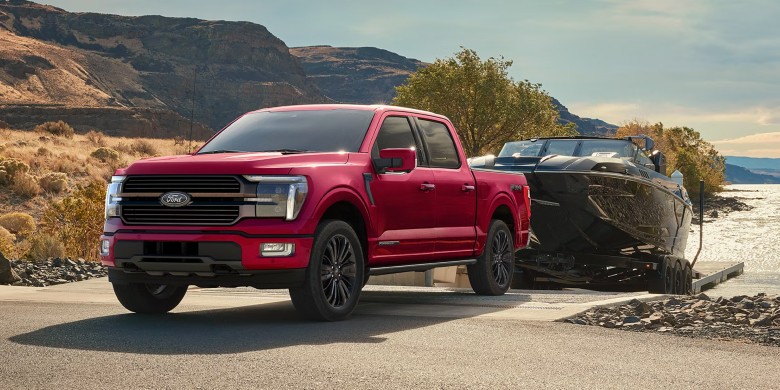
Payload and towing are major factors, too. Hauling gear for weekend trips or towing a trailer up toward the mountains will lower MPG. Off-road packages with larger tires create more rolling resistance, which reduces fuel economy.
Then there's our climate in Santa Fe. Hot summer days can cause the A/C system to work harder. Cold winter mornings may require longer warm-up times. Keeping your tires properly inflated is important in Santa Fe's desert climate. Temperature swings can cause tire pressure to fluctuate, and under-inflated tires will reduce your MPG.

Expected Lifespan & Mileage of the F-150
Modern F-150 engines are known for their durability. With proper maintenance, it's common for them to reach 200,000 miles or more. Some well-maintained trucks can go beyond that.
Santa Fe's dry climate is actually an advantage here. Rust and corrosion are far less common than in coastal areas. This helps extend the lifespan of the truck's frame, suspension, and underbody. Regular maintenance and tire rotations all play a role in keeping the truck running strong. High-mileage F-150s often remain reliable when they've been well cared for. If you're considering a used model, look at service records and how the truck was used by the previous owner (light commuting vs. heavy towing).

Choose the Right F-150 at Capitol Ford Santa Fe
Our team at Capitol Ford Santa Fe is ready to help you compare engines and explore real-world fuel economy. We offer a full selection of new and used F-150 models. If you want to feel the difference between engines first-hand, we're always happy to set up a test drive.

Frequently Asked Questions About F-150 MPG
What is the best MPG Ford F-150 engine?
The 3.5L PowerBoost Hybrid offers the best fuel economy at 25 MPG city / 25 MPG highway. For a non-hybrid, the 2.7L EcoBoost V6 is the most efficient with 20 city / 26 highway.
Does elevation affect Ford F-150 MPG in Santa Fe?
Yes. At 7,000 feet, the air is thinner, which can reduce engine efficiency. Turbocharged engines (EcoBoost) and hybrids are less affected by altitude, making them better choices for Santa Fe.
How many miles can a Ford F-150 last?
With regular maintenance, many F-150s reach 200,000+ miles. Some well-maintained examples exceed 300,000 miles. Santa Fe's dry climate helps prevent rust, which can extend vehicle life.
Does towing reduce F-150 MPG significantly?
Yes. Towing a heavy load can reduce fuel economy by 20–30% or more. The 3.5L EcoBoost and PowerBoost Hybrid are popular for towing because they offer a good balance of power and efficiency.
What is the difference between city and highway MPG on the F-150?
City MPG measures stop-and-go driving, while highway MPG measures steady cruising. The F-150 typically gets 2–5 MPG better on the highway depending on the engine.